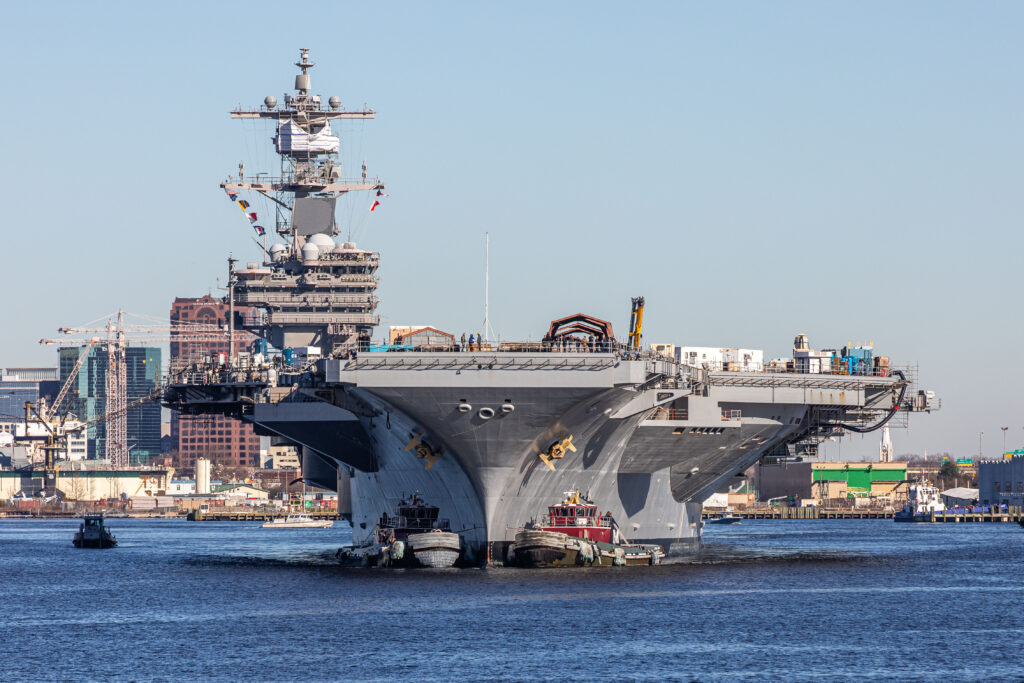
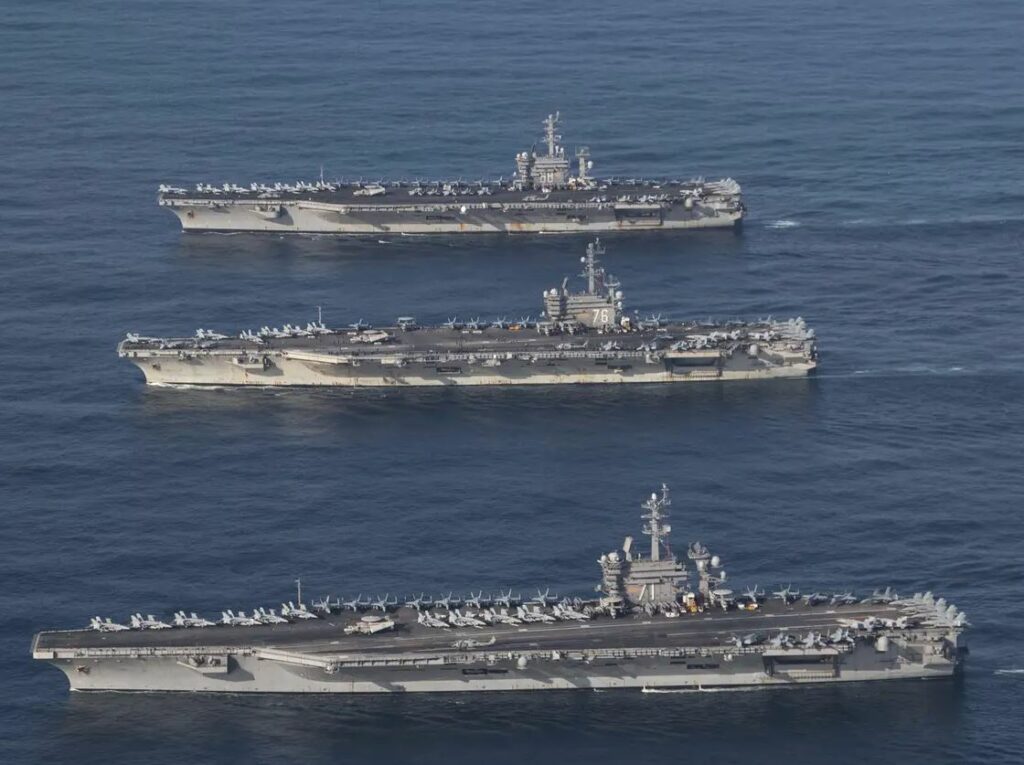
Comprised of men and women who provide parts and services for these great ships, the Aircraft Carrier Industrial Base Coalition (ACIBC) seeks to preserve the strength of the aircraft carrier program and promote the value of the aircraft carrier industrial base as a vital part of the nation’s overall defense structure.
Today’s U.S. Navy aircraft carriers are the stunning result of over 2,000 companies in 44 states performing $9.2 billion worth of work. These businesses provide the valves, wiring, steel, motors, and thousands of other parts that make these ships the preeminent expression of military power—capable of delivering sustained and overwhelming warfighting force around the globe.
SPENDING MAP
Aircraft carriers are built and maintained with parts built by over 2,000 businesses spread out across 44 states – helping inject $9.2 billion into communities across the country.
As the map below demonstrates, stability in aircraft carrier programs is critical not only to our national security, but also to the shipbuilding industrial base as well.
Data reflects spending between 2017-2021. Last updated March 2022.
Legislative Priorities
We encourage Congress to continue to seek procurement strategies that deliver the highest quality product for our warfighter, at the best value for our government, and at the best price for our fellow taxpayer. We are asking Members of Congress for support to advance the nation’s aircraft carrier program in a way that provides stability and consistency for ACIBC companies.
Support legislative language expressing concern about timing of the next procurement of Ford-class aircraft carriers and encouraging the Pentagon to restore procurement of CVN 82 no later than fiscal year 2029.
Augment the President’s FY25 Budget request by authorizing and appropriating $175M of advance-procurement funding to procure long lead time material and commodities for CVN 82/83 to ensure stability and continuity in the nuclear shipbuilding industrial base (Shipbuilding and Conversion, Navy (SCN) Line 5).
Support the President’s FY25 Budget request by authorizing and appropriating funding for aircraft carrier programs currently under contract: Carrier Replacement Program funding for John F. Kennedy (CVN 79), Enterprise (CVN 80) and Doris Miller (CVN 81).
Support the President’s FY25 Budget request by authorizing and appropriating funding for aircraft carrier programs currently under contract: Refueling and Complex Overhaul (RCOH) Program funding for USS John C. Stennis (CVN 74) and USS Harry S. Truman (CVN 75).
Coalition RESOURCES
Below are the key resources and documents that highlight ACIBC’s priorities for 2024:
The shipbuilding supply chain continues to innovate and support the newest, most innovative warfighters like Ford-class aircraft carriers. Read more from our newsroom on recent developments in carrier and industry news: